Deepfakes in 2026: From Marketing Tool to Security Threat
Deepfakes in 2026: how AI face swaps went from brand marketing tool to real security threat — and the steps that protect your team and your brand.

Years ago, photo manipulation meant clumsy color changes and warped, cartoonish overlays. Today, anyone can swap their face in a picture for anyone else's — and unsurprisingly, most early face swaps had users trading places with celebrities.
Since generative AI went viral, deepfakes have gone viral with it. They've moved far beyond static images to cloned voices and manipulated video. Brands weren't left out of the trend. In fact, the same technology ushered in a faster, easier, and much more flexible way of creating brand content and connecting with target audiences. Instead of spending days chasing the perfect location, lighting, and weather for a single shoot — with plenty of trial and error — generative AI lets brand owners simply clone themselves for content. Right now, many brands are pivoting fast to generative AI to handle most of their content creation, whether that's static photo reels, podcasts, or video.
Header photo by cottonbro studio: Pexels
Create with AI — without losing control
The same technology behind deepfakes powers modern brand content. Virtuall is the Creative AI OS that keeps it governed: brand rules, approvals, and a full audit trail on every generated asset.
Start creating with VirtuallWhat is a deepfake, and why is it different?
A deepfake is an almost identical artificial image, audio clip, or video created by AI to depict a person or an event. Thanks to their access to vast amounts of online data, AI platforms can recreate almost anyone and any event with close resemblance. Unlike generic photo manipulation — usually easy to spot — deepfakes are far more sophisticated. And because AI is continuously trained to optimize its generative results, deepfakes will keep getting harder to distinguish from real life.
The rise in security risks with deepfakes
The term "deepfake" appeared around 2017, when a Reddit user started posting AI face-swap content. What began as a fun little hobby quickly carved out a global niche with viral tutorials and posts. When the AI wave fully hit and more generative models opened up for public use, deepfakes became a major online phenomenon, with brands and regular users alike joining the trend.
Somehow, the rise of deepfakes is largely thanks to regular users being unwitting tools in training generative AI with pictures and audio samples from their everyday lives. Since AI is designed to store, recollect, and adapt data, it was inevitable that deepfakes would reach a point where they're nearly identical to real-life footage.
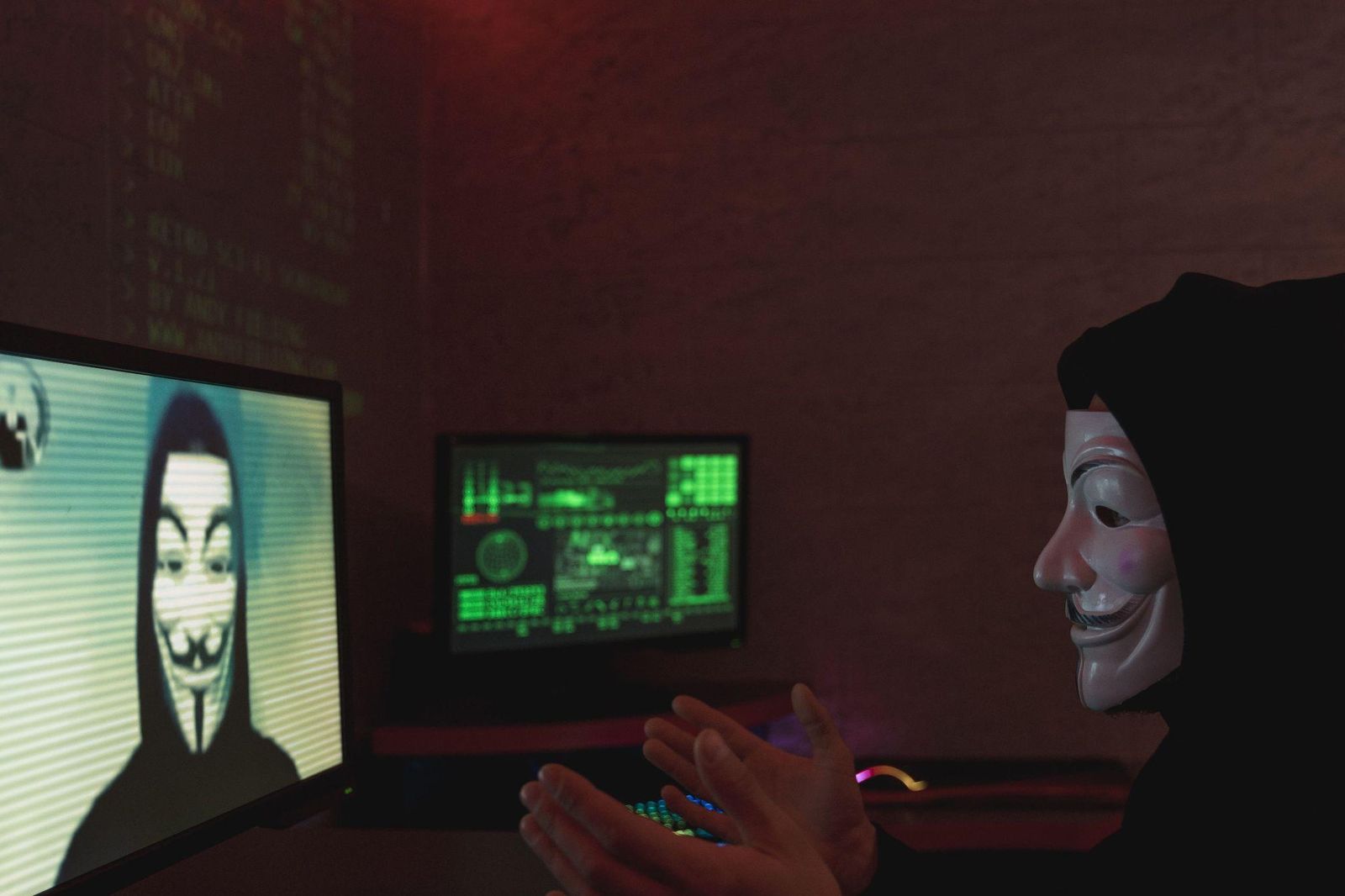
Cybersecurity experts had warned about the risks for years, but reality truly set in in 2024. The $25 million Arup wire fraud in Hong Kong showed exactly how dangerous deepfakes have become. This wasn't after-the-fact impersonation or blackmail — it was real-time impersonation, in which a criminal gang tricked a finance employee during a live conference call into executing a transaction. As far as the employee could tell, he was receiving direct audio and video confirmation in real time to process the transfer. In reality, everyone on the call except him was a deepfake.
Impersonation and blackmail — the greatest risk of deepfakes
While it's all fun and games for most generative AI users, bad actors have hijacked deepfakes for cybercrime. The era of poorly crafted phishing emails is fading fast. Instead, convincing deepfakes are now being used for extortion. One common pattern: you receive a call or a voice note from a loved one who sounds distressed. With the voice nearly identical, your gut never raises the alarm — instead, your mind goes into protective overdrive to help. By the time you can think it through, you've most likely already done something regrettable, like sending money.
Even people who feel confident they could spot a deepfake struggle when they're the victim. Imagine the damage control required when a fabricated video of you in a compromising situation goes viral. The internet tends to take such content hook, line, and sinker — and even after you finally clear the air, the stigma remains. That is why impersonation and blackmail have proven to be the most dangerous risks associated with deepfakes.
For brands, the answer is governance — not avoidance
Here's the uncomfortable truth: the technology behind a malicious deepfake and the technology behind a great AI-generated campaign are the same. Face swaps, voice cloning, generated video — the difference was never the model. It's consent, provenance, and control.
That's why the enterprise response to deepfakes can't be to avoid generative AI — that simply hands the advantage to everyone willing to use it irresponsibly. The answer is to run generation inside a governed system. In a Creative AI OS like Virtuall, every generated asset is a production event with context: who created it, which model produced it, which references shaped it, who approved it, and which usage rights apply. Brand rules are enforced at generation time, not reviewed after the fact.
And because Nyx, the agentic intelligence layer, remembers at the Personal, Project, and Studio level, that governance compounds over time: every approved asset strengthens the studio's institutional memory of what is on-brand, licensed, and real. So when someone asks "is this genuine, and who made it?", governed teams actually have an answer.
Security tips for combating deepfakes
Since deepfakes are bound to get trickier, it's wise to prepare for the worst-case scenario. Here's how to protect yourself:
- Stick to direct physical verification.
As long as you can't physically see who you're talking to, stay wary. This may sound paranoid — but remember the Arup wire fraud. Deepfakes are most dangerous online or through indirect communication, so find a way to directly verify whoever and whatever you're dealing with, even if it means calling or visiting a third party. As a rule, you can't be too careful.
You can also adopt a safe word that's only used internally, and train yourself to pause before acting. Most deepfake scams thrive on urgency; if you're able to pause and think, you're already better off.
- Learn the AI cues.
Deepfakes will keep getting more sophisticated, but some telltale signs remain. AI-generated video and audio often carry an unnatural smoothness with odd pauses. Where a real person reads a sentence with filler sounds and breaks, AI tends to hold a sustained, smooth pitch and mispronounce complex words that look like two separate words. Watch the lighting too — shadows often glitch.
A hilarious yet effective trick for detecting a deepfake in a live video: ask the participant to hold up a number of fingers. AI rarely gets that right.
Photo by Markus Winkler: Pexels - Minimize your digital footprint.
Since AI trains on online data, it's only wise to minimize what you share. That way, there's less — or outdated — material for building a content clone of you. If you must post videos and photos, consider adding a hint of distortion, whether auditory noise or visual grain.
This is also where a VPN plays an indirect role in fighting deepfakes. Unsecured sites are breeding grounds for man-in-the-middle (MITM) attacks that quietly steal both network and device data — data that may be used to train an AI to create your deepfake. So if you must access unsecured sites, always use a VPN to encrypt your traffic against such attacks. According to Cybernews' review on more about Surfshark plans, Surfshark is a great VPN choice for this.
- Multi-factor authentication is the way.
This is especially useful for companies and teams. First, ensure that your authentication channels aren't solely digital — beyond sharing digital passcodes, opt for physical confirmation too.
And while you're busy auditing your security features, keep both an online and an offline log of all updates and interactions. The idea is simple: if your online security systems are compromised, your offline backup stands as the final line of defense.
Conclusion
Governments around the world are fast-tracking policies to manage the security risks of deepfakes — a sign of how serious the situation has become. The good news is that you don't really need advanced detection tools to combat deepfakes. What you need is primarily a security protocol that prioritizes direct verification. Now more than ever, you shouldn't believe everything you see online.