Machine Learning and Deep Learning for Creative Teams
Explore machine learning and deep learning for creative teams, from AI workflows and governance to brand-safe image, video, and 3D production.
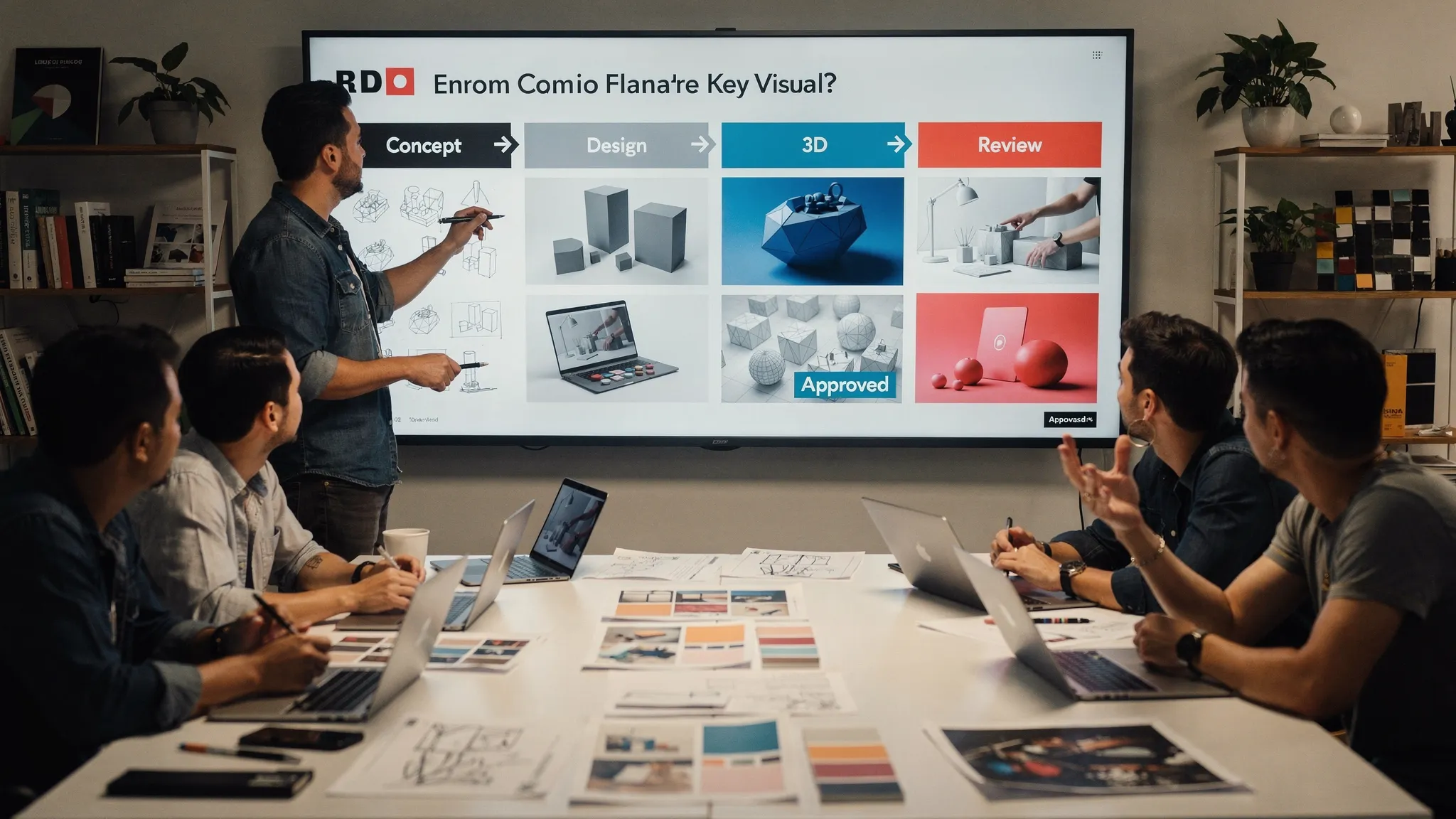
Creative teams have always worked with pattern recognition: visual references, audience signals, style systems, production constraints, and feedback loops. What has changed is that machine learning and deep learning can now help teams process those patterns at a scale that would be impossible manually.
For enterprise studios, brands, and game teams, the opportunity is not simply to generate more assets. The real opportunity is to build a controlled creative operating model where AI supports ideation, production, review, compliance, and reuse across every format, from image and video to 3D and audio.
That requires a practical understanding of what these technologies do, where they fit in the creative pipeline, and how to govern them without slowing teams down.
Machine Learning vs. Deep Learning in Creative Work
Machine learning is a branch of AI where systems learn patterns from data and use those patterns to make predictions, classifications, recommendations, or decisions. Deep learning is a more specialized form of machine learning that uses layered neural networks to recognize complex patterns, especially in unstructured data such as images, video, audio, language, and 3D representations.
For a technical baseline, IBM describes deep learning as a subset of machine learning that relies on neural networks with multiple layers. In creative production, that distinction matters because many of the most visible generative AI capabilities, such as image synthesis, video generation, text-to-3D experimentation, voice, and multimodal reasoning, are powered by deep learning models.
Here is a simple way to frame the difference for creative teams:
| Capability | Machine learning | Deep learning | Creative example |
|---|---|---|---|
| Classification | Strong fit | Strong fit | Tagging assets by product type, scene, color, or campaign |
| Prediction | Strong fit | Often useful | Forecasting which creative variants may perform better |
| Recommendation | Strong fit | Often useful | Suggesting relevant assets, references, or templates |
| Visual generation | Limited fit | Strong fit | Producing concept art, product visuals, backgrounds, or style variations |
| Multimodal understanding | Limited fit | Strong fit | Connecting prompts, mood boards, images, video, and 3D context |
| Automation of repeatable tasks | Strong fit | Strong fit | Resizing, localization, formatting, and asset adaptation |
Machine learning is often excellent for structure, such as metadata, routing, prediction, and decision support. Deep learning is especially powerful when the work involves complex creative media. Most modern creative AI systems combine both.
Why Creative Teams Need More Than Standalone AI Tools
The first wave of creative AI adoption was often experimental. A designer used an image generator. A marketer tested copy variants. A game artist explored textures. A social team created campaign concepts faster than before.
Those experiments proved that AI could accelerate parts of the creative process. They also revealed a larger operational problem: when every team uses different tools, models, prompts, accounts, and approval habits, the organization loses control.
The result can be creative inconsistency, unclear rights management, duplicated work, unapproved assets, weak brand alignment, and security concerns. In enterprise environments, those risks become more serious because creative output is tied to brand equity, legal exposure, customer trust, and revenue.
The Stanford AI Index has consistently documented the rapid acceleration of AI capabilities and adoption. For creative leaders, the message is clear: AI is no longer a side experiment. It is becoming part of the production stack, which means it needs the same level of operational discipline as other enterprise systems.
What Machine Learning and Deep Learning Can Do for Creative Teams
The value of AI depends on where it is applied. The strongest use cases are not random shortcuts. They are places where creative teams already face bottlenecks, repetitive work, or high variation.
Faster Creative Exploration
Deep learning models can help teams explore directions quickly: visual territories, mood variations, product environments, character references, packaging ideas, scene compositions, and campaign concepts. This does not replace art direction. It gives art directors and designers a wider field of options before committing production time.
The creative advantage is speed at the front of the process. Instead of waiting days for the first round of references or mockups, a team can generate controlled variations around a brief, compare options, and refine the strongest directions.
Brand and Style Consistency
Creative AI becomes more useful when it understands context. A model that generates a visually impressive image is not enough if the output ignores the brand, campaign system, product constraints, or previous art direction.
This is where contextual inputs, such as mood boards, approved references, generation templates, and team-defined rules, become important. They help AI work inside the creative system rather than outside it.
For a CMO, this supports brand consistency across markets and channels. For an art director, it protects the visual language. For an application manager, it reduces uncontrolled tool usage. For a game developer, it helps maintain the style of a world, character set, or environment.
Production Adaptation Across Formats
Many creative teams do not struggle to produce one strong asset. They struggle to adapt that asset across dozens or hundreds of variants: languages, regions, aspect ratios, channels, product lines, seasons, and audience segments.
Machine learning can support asset classification, versioning, routing, and recommendations. Deep learning can help generate or adapt visual and audio material. Together, they can reduce the manual burden of creative adaptation, especially when paired with human review and approval workflows.
Better Asset Discovery and Reuse
Enterprise creative teams often have large libraries of images, videos, 3D files, campaign assets, and references. The problem is not always production volume. Sometimes it is findability.
Machine learning can improve asset management by helping tag, classify, and retrieve relevant materials. This makes it easier to reuse approved assets, avoid duplicate production, and keep teams aligned around existing brand resources.
Support for 3D and Game Pipelines
Game studios and 3D teams can use AI to accelerate concepting, texture exploration, environment ideation, reference generation, and asset variation. The important point is that AI outputs still need to fit the pipeline.
A beautiful generated asset is not production-ready if it cannot move through review, optimization, technical validation, or engine integration. Creative AI must connect with the tools and constraints that developers, technical artists, and production teams already use.
The New Creative AI Workflow
A mature AI workflow is not just prompt, generate, download. It is a governed loop that connects intent, models, review, assets, and production systems.
| Workflow stage | What happens | Why it matters |
|---|---|---|
| Creative intent | The team defines the brief, visual direction, audience, constraints, and required formats | AI starts from a shared production goal, not a vague prompt |
| Context setup | Approved references, mood boards, brand rules, and previous assets inform the work | Outputs are more consistent with the studio or brand |
| Model orchestration | The right AI models are selected or routed for the task | Teams avoid relying on a single model for every use case |
| Generation | Variants are created from templates, prompts, or structured workflows | Teams can scale exploration while keeping control |
| Review and annotation | Stakeholders comment, request changes, approve, or reject | Human judgment stays in the loop |
| Asset management | Approved outputs are stored, organized, and made available for reuse | Production knowledge compounds over time |
| Pipeline tracking | Teams monitor status across concepts, revisions, approvals, and delivery | Creative AI becomes manageable at scale |
This workflow is especially important for enterprise teams because it turns AI from an isolated tool into an operating layer. The goal is not to remove creativity from the process. The goal is to remove unnecessary friction from the process while preserving creative judgment.
Governance Is a Creative Advantage
Governance can sound restrictive, but in creative AI it is often what makes scaling possible. Without clear rules, teams become cautious or chaotic. With the right rules, they can move faster because they know what is approved, what is allowed, and how work should be reviewed.
The NIST AI Risk Management Framework organizes AI risk management around governance, mapping, measuring, and managing. For creative teams, that translates into practical questions:
- Which AI models and tools are approved for which types of work?
- What data, references, and assets can be used in prompts or workflows?
- Which outputs require legal, brand, or creative review before publication?
- How should teams handle sensitive product, customer, or campaign information?
- Where should approved AI-generated assets live after review?
In Europe and for companies operating in European markets, AI governance is also becoming a regulatory concern. The European Commission AI Act overview explains the EU risk-based approach to AI regulation. Even when a creative use case is not classified as high-risk, enterprises still need responsible processes around transparency, data handling, and accountability.
Strong governance does not mean every generation needs a committee. It means the organization defines the rules once, embeds them into workflows, and gives teams a safe way to move quickly.
What Each Role Should Care About
Different stakeholders look at AI from different angles. A successful creative AI strategy needs to satisfy all of them.
For CMOs: Brand Scale Without Brand Drift
CMOs need speed, consistency, and measurable business impact. Machine learning and deep learning can help marketing teams create more campaign options, localize content, test variations, and respond faster to market opportunities.
The key risk is brand drift. If AI output spreads across teams without shared standards, the brand becomes inconsistent. CMOs should prioritize systems that support governance, approvals, reusable templates, and clear creative context.
For Art Directors: More Control, Not Less
Art directors do not need AI to make random images. They need AI to support a point of view. The best workflows give art directors control over references, style constraints, composition, mood, and iteration.
Deep learning is most useful when it becomes an extension of art direction. It can help generate options, but the creative lead still defines taste, quality, and intent.
For Application Managers: Integration and Compliance
Application managers are responsible for making tools work safely inside the enterprise stack. Their concerns include access, security, data flows, integrations, system governance, and support.
For them, the question is not whether an AI tool is exciting. The question is whether it can connect to existing creative tools, DAM, PIM, DCC workflows, APIs, approval processes, and compliance requirements.
For Game Developers: Pipeline Fit and Production Quality
Game developers need assets that support the production pipeline. AI can accelerate ideation and variation, but outputs must still meet the requirements of technical art, game engines, performance, style, and collaboration.
The highest-value AI use cases in games are often those that reduce iteration time while keeping human control over final quality.
Measuring the Impact of Creative AI
Creative AI should not be measured only by how many assets it generates. More output is useful only if it improves the creative process, reduces waste, or increases quality.
A better measurement approach connects AI to operational and creative outcomes.
| Goal | Useful metric | What it reveals |
|---|---|---|
| Faster ideation | Time from brief to first creative directions | Whether AI is reducing early-stage friction |
| Higher consistency | Approval rate of generated assets | Whether outputs match brand and creative expectations |
| Better reuse | Percentage of projects using existing approved assets | Whether asset libraries are becoming more valuable |
| Efficient localization | Time needed to adapt assets across markets or formats | Whether AI is helping production scale |
| Governance adoption | Share of AI work completed through approved workflows | Whether teams are using AI safely and consistently |
| Pipeline visibility | Number of assets by stage, such as concept, review, approved, delivered | Whether managers can track AI-assisted production |
These metrics help leaders avoid two common mistakes: treating AI as a novelty or treating it as a pure cost-cutting tool. The best creative AI programs measure speed, quality, consistency, compliance, and team adoption together.
Common Mistakes to Avoid
The most common AI mistake in creative organizations is starting with tools instead of workflows. Teams choose a model, run experiments, and only later ask how the outputs should be reviewed, stored, reused, or governed.
Another mistake is assuming that one model should do everything. Creative work is multimodal. Image, video, 3D, audio, and text tasks often benefit from different models and different workflows. A multi-model strategy gives teams more flexibility and reduces dependence on a single provider or capability.
A third mistake is ignoring context. AI systems perform better when they receive clear constraints, examples, and production intent. Prompts alone are rarely enough for enterprise consistency. Teams need reusable blueprints, reference systems, and shared creative memory.
Finally, some organizations underinvest in human review. Deep learning can generate impressive outputs, but creative judgment, brand accountability, legal review, and production validation remain essential. The strongest workflows keep humans in control of final decisions.
How Virtuall Supports Creative AI at Scale
The Creative AI OS is built for teams that need to operate creative AI across studios, workflows, and tools. Instead of treating AI as a disconnected set of generators, The Creative AI OS provides a Creative AI operating system for controlled, scalable content creation.
With Virtuall, teams can define governance controls, orchestrate workflows, and work across multiple content formats, including image, video, 3D models, and audio. Generation blueprints help standardize repeatable creative processes, while studio context memory through mood boards helps preserve intent across teams and projects.
Virtuall also supports collaboration through review workflows, approvals, and content annotation. Asset management and pipeline tracking help teams organize production, while plugins and APIs support integration with creative tools such as DCC, PIM, and DAM systems.
For enterprises with compliance requirements, Virtuall offers EU-based infrastructure and inference. Nyx, the intelligence layer of the Creative AI OS, orchestrates multiple industry-leading AI models while keeping intent and context across studios and teams.
The result is a more practical path to creative AI adoption: one that supports experimentation, but also gives leaders the control needed for production.
A Practical Starting Point for Creative Teams
If your team is beginning or formalizing its AI strategy, start with a focused workflow rather than a broad mandate. Choose a use case where the creative value is clear and the review path is manageable.
Good starting points include campaign concept exploration, product visual variations, mood board expansion, asset tagging, localization support, or 3D reference generation. These use cases are valuable because they connect directly to existing creative work.
Before scaling, define the operating rules. Decide which models are approved, what references can be used, who reviews outputs, where assets are stored, and how success will be measured. This foundation makes it easier to expand AI usage without creating confusion later.
Machine learning and deep learning are powerful, but they deliver the most value when embedded into a creative system. The future belongs to teams that can combine AI speed with human direction, brand governance, and production discipline.
Frequently Asked Questions
What is the difference between machine learning and deep learning for creative teams? Machine learning helps systems learn patterns from data for tasks like classification, prediction, tagging, and recommendations. Deep learning uses neural networks with many layers and is especially useful for complex creative media such as images, video, audio, and 3D.
Can deep learning replace designers, artists, or creative directors? No. Deep learning can accelerate exploration and production tasks, but it does not replace creative judgment, brand strategy, taste, storytelling, or final approval. The best creative AI workflows keep humans in control.
How can enterprise teams keep AI-generated content on brand? Teams need shared creative context, approved references, generation blueprints, governance controls, and review workflows. AI output becomes more reliable when it operates inside a defined creative system rather than through isolated prompts.
Is creative AI useful for game studios? Yes. Game teams can use AI for concept exploration, environment references, texture ideas, 3D asset variation, and production support. The key is to connect AI outputs to the actual game pipeline and review process.
Why is AI governance important for creative production? Governance defines which tools, models, assets, and workflows are approved. It helps teams move faster while reducing risks around brand consistency, data handling, compliance, and unapproved content.
What should a creative team measure when adopting AI? Useful metrics include time to first concept, approval rates, asset reuse, localization speed, workflow adoption, and pipeline visibility. The goal is to measure quality and operational impact, not only generation volume.
Bring Creative AI Under Control
Creative teams do not need more disconnected AI experiments. They need a reliable way to operate AI across briefs, models, reviews, assets, and production systems.
Virtuall helps studios and enterprises orchestrate creative AI with governance, workflow control, multi-model generation, team collaboration, and production-ready processes across image, video, 3D, and audio. If your organization is ready to scale AI without losing control, The Creative AI OS provides the operating layer to make it happen.