A Creative's Guide to Digital Flora and Fauna
Explore how to transform flora and fauna concepts into scalable digital assets. This guide covers AI workflows for creatives seeking authorship and quality.
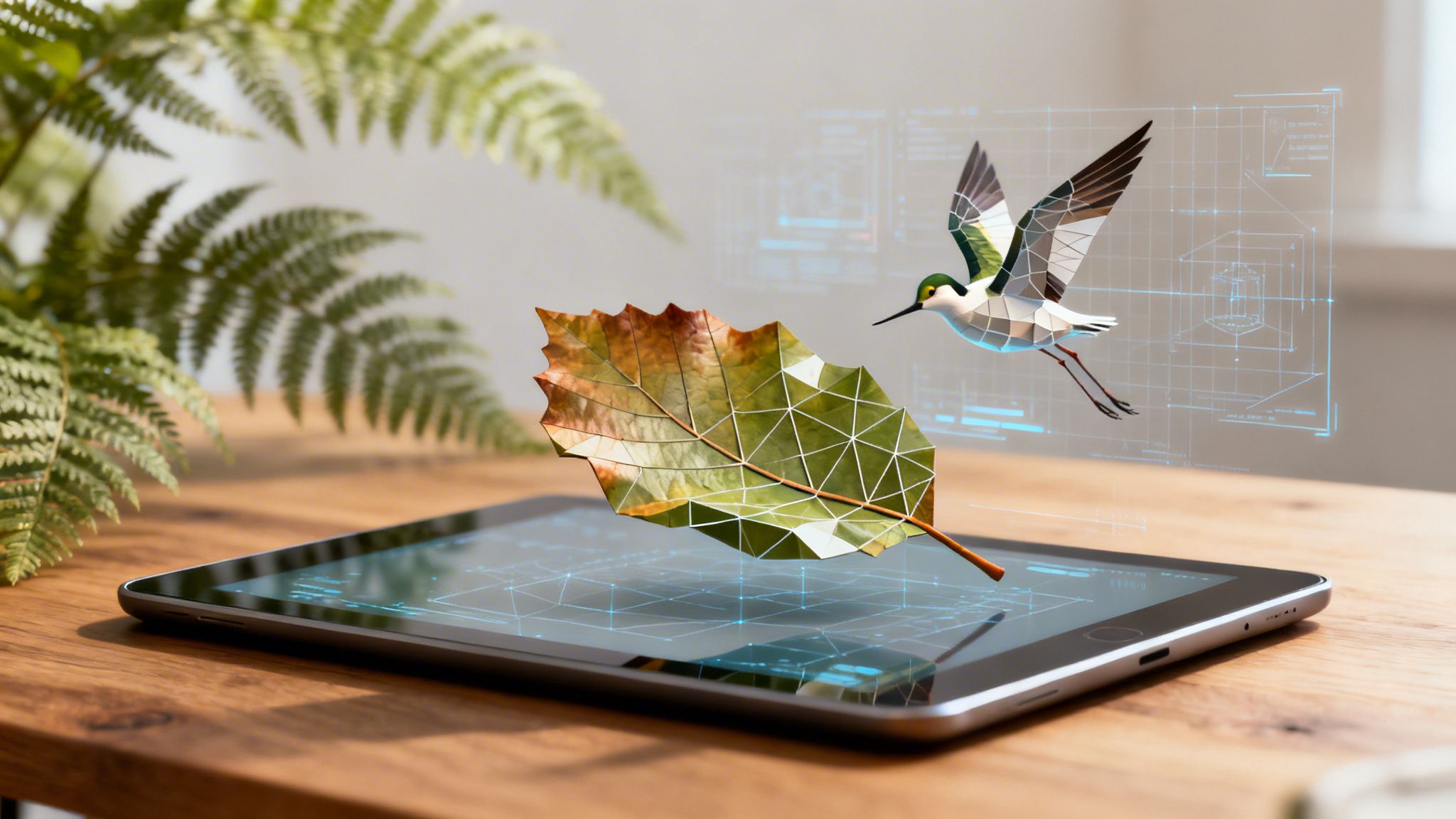
Imagine crafting a digital world where the flora and fauna feel truly alive—not just as background dressing, but as essential pieces of the story. For creatives, the rise of AI presents a choice: do you want a tool that acts like telepathy, instantly delivering what you ask for? Or do you want to wield magic, where your skill, taste, and direction shape a powerful tool to bring your unique vision to life?
This guide is for creatives who choose magic. We'll explore how to capture the essence of flora and fauna and turn it into stunning, consistent digital assets by directing AI as a creative partner. If you believe in authorship and want to feel like a magician, not just an order-taker, you can start building your digital ecosystem with VirtuallPRO. Try our Creative AI OS for free if you haven't generated anything yet.
From Natural Inspiration to Digital Reality
For any creative team, capturing the soul of the natural world is a constant challenge. It's not just about replicating a plant or an animal; it's about telling the story of its environment. And that job feels even more urgent when you realise how fragile these ecosystems are.
The inspiration we pull from nature isn’t a bottomless well. Here in Denmark, our lush native life faces serious threats from intensive agriculture and urban sprawl, which are carving up natural habitats. With over 50% of the land used for farming, biodiversity is feeling the squeeze.
A recent, pretty shocking, report found that Denmark is close to losing a fifth of its animal, plant, and fungi species. You can dig into the full status report on the Nordic Biodiversity Framework to grasp just how serious it is.
This reality adds a layer of responsibility to our work. When we generate digital flora and fauna, we’re not just making assets. We’re building digital representations of a world that desperately needs our attention and preservation.
The Two Paths of Creative AI
As AI becomes a core part of the production pipeline, a clear philosophical split is emerging:
Telepathy AI: This is the world of instant results. You think it, the AI makes it. It’s convenient, sure, but it can quickly reduce the creator to a mere order-taker, stripping away the craft and the feeling of ownership.
Magic AI: This path requires skill and taste. You learn to wield the tool, and your direction is what matters. It puts authorship back in your hands and makes you feel like a magician shaping the final outcome.
At Virtuall, our platform VirtuallPRO is built for the magicians. We believe real creative power lies in using technology to amplify your vision, not replace it.
Why Understanding Ecosystems Elevates Your Art
You can't build a believable world without first getting to grips with what lives in it. The term flora and fauna is way more than just a scientific label for plants and animals; it’s the entire web of life that gives an ecosystem its personality and makes it feel real.
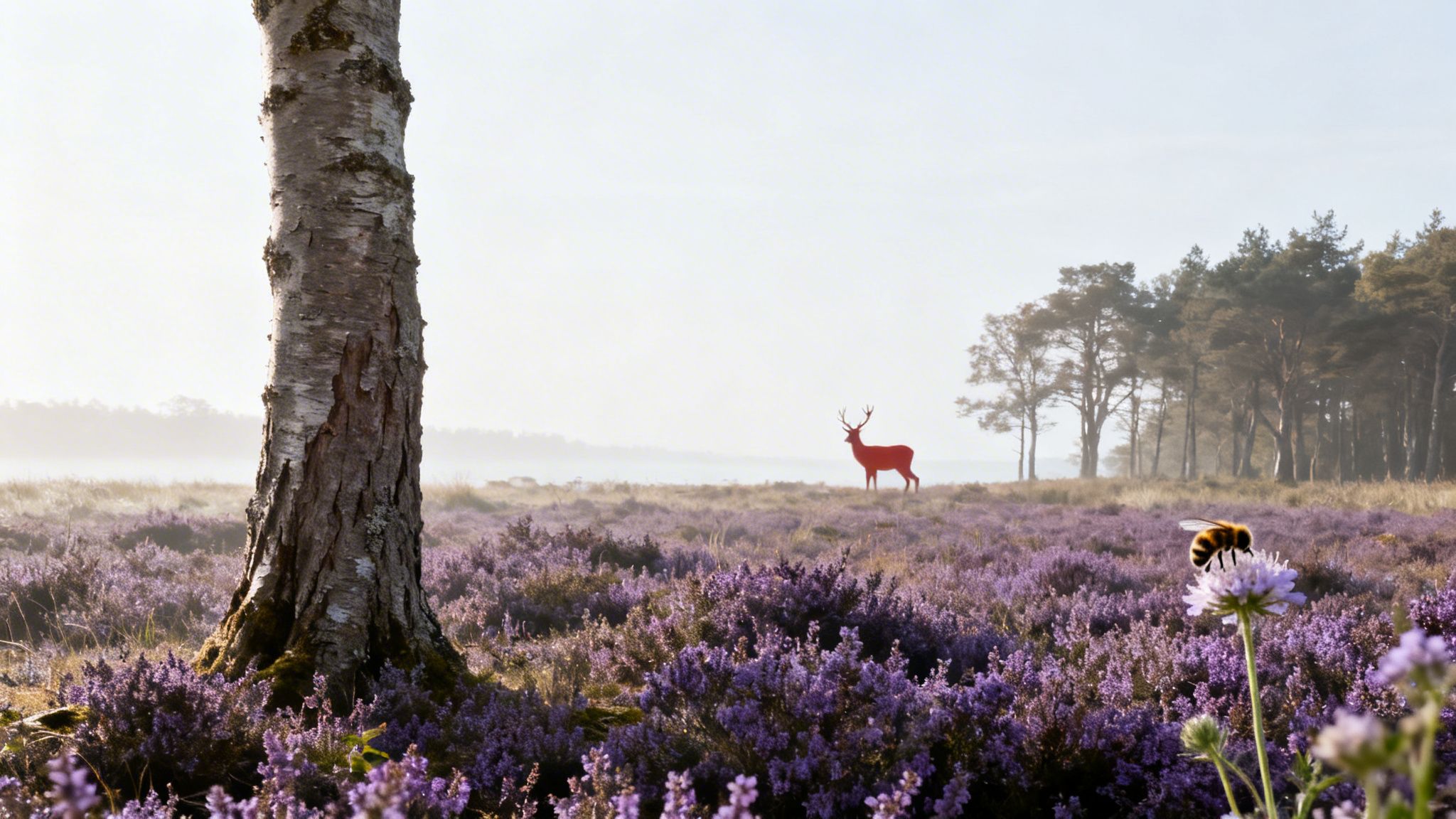
Think of flora as all the plant life. Everything from the massive beech trees you'd find in a Danish forest right down to the tough, salt-loving flowers clinging to the coastline. It's the texture of moss on an old stone or the exact species of grass in a field.
Fauna, on the other hand, is all the animal life. This covers the majestic red deer roaming those same woods, but also the tiniest insects that pollinate the local flowers. They all depend on each other, and that relationship is what keeps the whole environment ticking. For any creative, this is ground zero for world-building.
From Labels to Living Worlds
Grasping the specifics of flora and fauna is what separates a generic, copy-paste 'forest' from an authentic Danish woodland. It’s the difference between dropping in a random deer asset and knowing that a red deer's behaviour, diet, and even its coat are shaped by that specific environment.
This is the knowledge that lets art directors, game developers, and 3D designers move past just making assets. It’s how you start building worlds—environments that tell a story all on their own.
An ecosystem’s authenticity is in its details. When the flora supports the fauna, and both feel true to their environment, a digital space transforms from a mere scene into an immersive, resonant world.
Ultimately, when you get these natural relationships right, your visuals become more than just beautiful—they become convincing. The viewer feels the truth of the world you’ve built because every last element, no matter how small, belongs there. Your art stops being decorative and starts being narrative.
Choosing Your Creative Power: Telepathy Versus Magic
When you look at the new wave of creative AI tools, you’re not just choosing a feature set. You’re picking a side in a philosophical debate, a choice between two entirely different ways of working: telepathy versus magic.
Getting this choice right is everything for a creative professional who wants to produce work that actually feels like their own.
Telepathy AI is the instant gratification machine. You think it, you type it, you get it. The whole process is designed to be frictionless, almost like ordering from a digital catalogue of ideas. It’s undeniably fast, but it skips the journey—the craft, the happy accidents, and the deep satisfaction that comes from wrestling an idea into existence.
The Allure of Instant Results
With a purely telepathic AI, the only real skill to master is describing what you want. The tool does all the heavy lifting, serving up a finished product on demand. On paper, that sounds like a dream. But it raises a tough question for anyone who calls themselves a creator.
If AI becomes pure telepathy, creativity becomes a commodity. When anyone can make anything instantly, nothing feels earned, distinct, or authored. Convenience scales, but meaning doesn’t.
This path risks turning artists into prompters and art directors into mere consumers of AI-generated assets. Sure, the final image might look slick, but that crucial sense of ownership gets lost. Your unique vision ends up playing second fiddle to the AI’s interpretation.
Wielding AI as a Magical Tool
Magic AI, on the other hand, is a powerful instrument that you learn to wield. Your words are the starting point, but your taste, your direction, and your expertise are what truly shape the outcome. It's a partnership. You guide the technology, and you get better and more precise with it over time.
You can still get the same result as a telepathy tool—a stunningly realistic piece of digital flora and fauna, for example—but the feeling behind it is worlds apart.
This approach has some friction, but it’s the good kind. It’s the rewarding struggle of mastering an instrument or getting the hang of a new piece of software. It builds a sense of authorship because your skill and creative choices are what make the final work great.
So, how do these two philosophies really stack up for creative pros? It’s a classic showdown between the instant-result convenience of Telepathy and the empowering, skill-based partnership of Magic.
Creative AI Philosophies: Telepathy vs. Magic
| Attribute | Telepathy AI | Magic AI |
|---|---|---|
| User Role | An order-taker who specifies an outcome. | A magician who directs a powerful tool. |
| Process | Minimal process, focused on immediate results. | Iterative process, focused on refinement and skill. |
| Skill Required | Low skill ceiling, focused on simple commands. | High skill ceiling, rewarding taste and direction. |
| Ownership | Feels like a transaction, with low authorship. | Feels earned, with a strong sense of authorship. |
While a lot of people might say they want maximum ease, the tools we truly fall in love with are the ones that make us feel like magicians. We want to show off our unique talents—it’s wired into our creative DNA.
For creative teams, choosing magic isn’t about working slower. It’s about ensuring their work remains distinct, valuable, and genuinely their own.
Orchestrating Nature with VirtuallPRO
How do you make sure the exact shade of purple on a sprig of heather from a Jutland heath looks the same across dozens of different assets? It's a classic production headache. This is where AI orchestration completely changes the game for creative teams. VirtuallPRO, with our AI Art Director Nyx at the helm, provides the framework to solve these kinds of complex, real-world challenges.
Instead of endlessly tweaking one-off prompts and hoping for the best, you define a clear creative intent for the entire project. Nyx then acts as the conductor, orchestrating multiple specialised AI models to produce a symphony of accurate and consistent results at scale. Every single piece of flora and fauna comes out perfect.
From Single Asset to Full Ecosystem
This approach takes you way beyond simple asset generation. It’s a fully directed production pipeline. For example, you could design a repeatable Blueprint to generate an entire Danish coastal ecosystem. This would ensure the marram grass, the sea-holly, and even the sand lizards all feel biologically and stylistically coherent. One world, one vision.
Getting this right is crucial, especially when you're creating digital versions of delicate, real-world environments. The need for accuracy is highlighted by a stark irony in Denmark's own conservation efforts. The nation is a champion for global biodiversity, yet a 2023 report revealed that only 2.3% of its own nature meets strict protection standards—a sharp contrast to government claims. You can read more about these findings and what they mean for Denmark's natural heritage in the full report from Biodiversitetsrådet.
This shift gives you complete governance over your style. It guarantees every asset feels authored and authentic, whether it’s for a high-stakes game, a feature film, or a global marketing campaign.
When you think about bringing digital ecosystems to life, the principles are similar to using AI for complex scene creation. You're directing AI with intent to build a cohesive, believable world. This method gives you the control to craft everything from a single leaf to a sprawling, living forest.
The Power of Directed Creation
By orchestrating AI, you're not just mindlessly generating images. You are building a governed, scalable system for asset creation. This ensures that every element, from the biggest tree down to the smallest insect, aligns perfectly with your creative vision. The sense of authorship stays firmly in your hands, giving you the power to create truly authentic digital nature.
For those looking to dive deeper into creating self-contained ecosystems, check out our guide on designing a 3D terrarium background. It explores many of the same principles of controlled, intentional world-building.
Putting It All Together: A Practical Workflow for Digital Ecosystems
Let’s move from theory to a real-world example. Say your team needs to create a set of stylised flora and fauna assets for a new game based in Denmark’s Wadden Sea National Park. How do you go from a blank canvas to a cohesive, scalable set of assets using this kind of AI-assisted workflow?
It all starts with a clear vision, not a blind prompt. The art director first defines the creative direction, pulling together key visual references for the hero species—like the harbour seal (spættet sæl) and the elegant avocet (klyde)—along with the park’s unique coastal plant life.
Defining the Creative Blueprint
With the vision set, the next step is to codify it inside VirtuallPRO by creating a 'Wadden Sea Biome' Blueprint. This isn’t just a folder for assets; it’s the DNA of the entire project. It locks in the core artistic style, the specific colour palette of the tidal flats, and critical technical rules like polygon counts and texture formats.
Now, an artist can prompt our AI Art Director, Nyx, to generate the first 3D models. Nyx doesn't just rely on a single AI; it intelligently orchestrates multiple specialised models to produce a high-quality base asset that already follows the Blueprint’s rules. A first-pass harbour seal model, for instance, will pop out already matching the project's established aesthetic.
This infographic breaks down the basic flow for this kind of directed AI production.
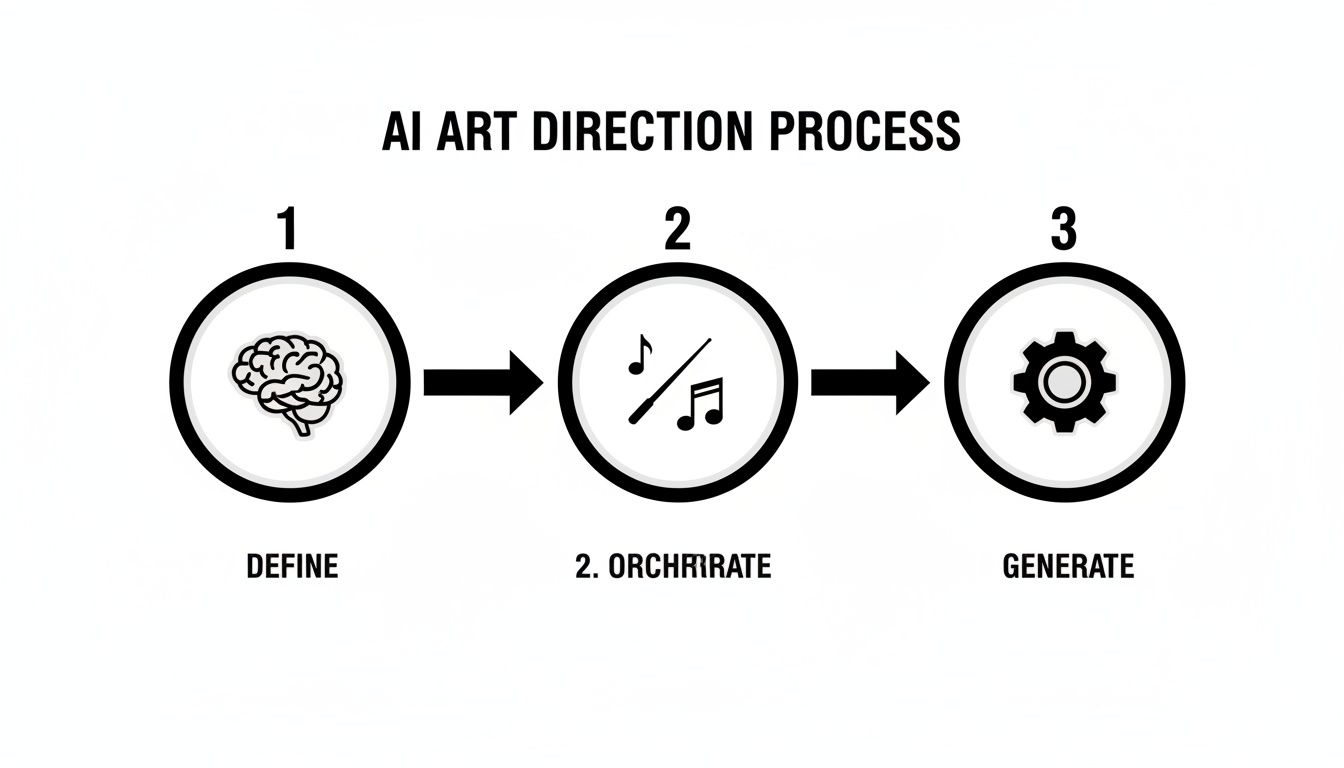
As you can see, the process puts human creativity firmly in the driver's seat. Orchestration simply acts as the bridge between creative intent and the final generated asset.
Collaboration and Scalable Production
From this point on, it’s all about collaboration. The team can work directly on the 3D model right inside the platform, annotating it with feedback for quick refinements. This tight iterative loop is what gets you to the perfect final asset, fast. If you're keen to master the art of guiding AI, our deep dive into the fundamentals of prompt engineering is a great place to start.
This is where the real magic lies. It's a governed, collaborative process that puts control and authorship firmly back in the hands of the creative team. AI becomes an accelerator, not a replacement for artistic integrity.
Once that hero harbour seal asset gets the green light, the true power of the Blueprint is unlocked. Your team can use it to generate dozens of variations or even create other Wadden Sea species. The result is a complete, perfectly cohesive set of flora and fauna assets—all aligned with the original vision and ready to drop straight into your game world.
Why Authorship Is Your Most Valuable Asset
What happens when AI becomes pure telepathy—when anyone can conjure anything just by thinking it? Creativity itself risks becoming a cheap commodity. When work isn’t earned through skill and intention, it loses what makes it special.
We all want fast results, but the tools creatives truly love are the ones that make them feel like magicians. They’re the tools that reward expertise and reflect a unique point of view.
That process of learning and mastering a tool builds a deep, unshakable sense of ownership. For a creative studio, this isn't just a feeling. It's a business imperative.
Defending Your Creative Identity
Authored work is distinct. More importantly, it’s defensible. It carries a unique perspective that builds a brand identity audiences can actually connect with. When every asset is the result of a deliberate choice, your studio’s signature becomes unmistakable.
By choosing the path of 'magic' over 'telepathy,' creative teams make sure their work stays valuable in a world flooded with generic, unauthored content. We explore this more in our discussion on the nature of AI-generated content.
A studio’s value isn’t just in what it produces, but in how it produces it. Authorship is the barrier against commoditisation, turning every asset from a simple output into a piece of a larger, cohesive vision.
Connecting Art to Real-World Impact
This need for authored, meaningful content really hits home when creating digital flora and fauna. Denmark’s commitment to global biodiversity funding is a great start, but protection back home reveals some critical gaps.
Agriculture, which covers over half the land in Denmark, threatens 24,000 of 28,000 at-risk species worldwide—a pressure we see mirrored locally.
For creative teams using VirtuallPRO, these aren’t just statistics; they’re story hooks for building immersive 3D worlds. You can use Blueprints to define consistent Danish biomes—from Jutland heaths to the tidal flats of the Wadden Sea—and use Nyx to generate brand-compliant assets that subtly educate players on these real-world biodiversity challenges.
This approach creates more than just beautiful assets. It creates work with a purpose. To get a better sense of this global-local dynamic, you can read the full draft on Denmark's contribution to the Global Biodiversity Framework Fund.
In the end, authorship is what gives your work a soul. It's the human touch that no purely telepathic AI can ever replicate, and it’s your most valuable asset.
Common Questions on AI and Digital Nature
As more creative teams start using AI to generate digital flora and fauna, a few big questions always come up. People worry about accuracy, artistic control, and whether these tools actually make production faster.
The key is to see a governed AI system not as a replacement for artists, but as a seriously powerful creative partner. Let’s tackle some of the most common queries we hear.
How Can I Ensure Botanical and Zoological Accuracy?
This is a big one. Accuracy starts where it always has: with a strong creative brief and high-quality reference material.
Inside VirtuallPRO, you can feed the system specific reference sheets and anatomical guides. Our AI Art Director, Nyx, uses these to inform the structure, colour, and texture of every asset it creates. By orchestrating specialised AI models trained on actual biological data, you get a degree of realism that’s miles ahead of a simple text prompt.
This moves your process from guessing with prompts to true art direction, with iterative refinement based on expert feedback. If you're fascinated by how tech is intersecting with the natural world, new developments like AI Species Identification Technology show just how sophisticated this field is becoming, both for real-world and digital verification.
Will Using AI Diminish the Role of 3D Artists?
Not at all. We see AI tools elevating the artist's role from a manual modeller to a creative director.
Think about it. Instead of spending hours on repetitive tasks like creating leaf variations or sculpting bark textures, artists can focus on the bigger picture: high-level direction, world-building, and fine-tuning the final assets that make a project shine.
VirtuallPRO acts as a creative co-pilot. It handles the laborious parts of production while keeping the artist firmly in control of the vision. You're not being replaced; you're being empowered to orchestrate creativity on a much grander scale.
How Does VirtuallPRO Maintain Consistency Across Many Assets?
Consistency is one of the biggest headaches when using multiple AI tools. We solve this with a core feature called 'Blueprints.'
A Blueprint is basically a repeatable recipe. It locks in all the key creative parameters—your specific artistic style, lighting setups, colour palettes, polygon counts, and texture resolutions.
Imagine you define a Blueprint for a 'Danish Forest Biome.' Every single asset generated using that Blueprint, from oak trees and ferns to the wildlife, will automatically follow those rules. This ensures everything looks like it belongs in the same cohesive world.
This approach gives you the governance you need to scale up production without ever sacrificing quality or artistic integrity. It’s control, not chaos.
Ready to wield AI with the skill of a magician? VirtuallPRO gives you the control to orchestrate stunning, consistent digital nature at scale. Start building your world today.